September 24th, 2010

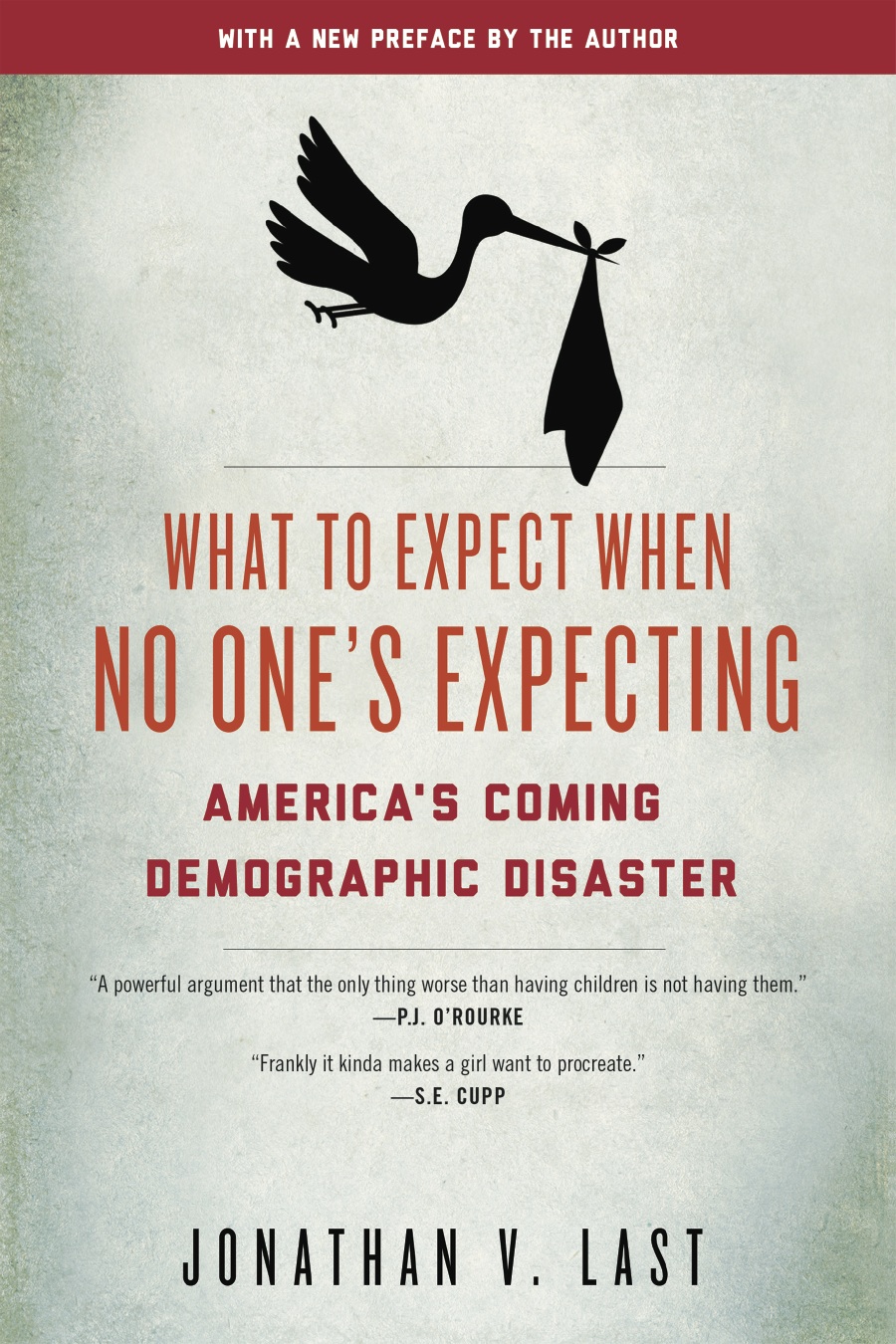
Over at the Standard I’ve got a long piece up about fertility and demographics title America’s One-Child Policy. The basic gist is this:
For a very long time time, the fertility rate has been declining across the globe. To achieve a steady-state population, a closed system needs an average of 2.1 children per-woman. Nearly every industrialized nation is already below the replacement-level. The rate of decline in developing nations is so steep that most of them will be below replacement relatively soon. Every country is experiencing this decline due to a unique set of circumstances, though many countries have certain drivers in common.
Which this all means that the world is headed–within the next 50 years or so–for population contraction. And there is no precedent in human history for prosperity in the face of a shrinking population.
This isn’t new ground that I’m ploughing. Various demographers have been alarmed about collapsing fertility for the last 30 years or so. Ben Wattenberg’s The Birth Dearth was the first to gain wide notice. George Weigel and Mark Steyn dealt with the issue more recently in The Cube and the Cathedral and America Alone. (Both of which are truly excellent, even though they deal primary with other subjects.) And there has been a lot of academic work done on the subject from all corners including–oddly enough–the U.N’s Population Divsion. (You would think that they’d be stuck in Paul Ehrlich’s Population Bomb mode, but while the main body of the U.N. is, the Population Division is remarkably serious and diligent.)
But the two men whose contributions I found the most important are AEI’s Nick Eberstadt and the New America Foundation’s Phillip Longman. Eberstadt has written of ton of hair-raising stuff about fertility problems in Russia, China, and Greater Asia. Longman wrote about the global scope the phenomenon in The Empty Cradle. (Empty Cradle is, for my money, one of the most important books of the last 10 years. If you haven’t read it, order a copy today.) I’ve leaned heavily on both of these rock stars.
There is, I think, a lot more to say about fertility and demography in America and abroad, which is why I’m dedicating a page on the site (up there, in the nav bar) to the subject.
2 commentsMichael Vick, Andy Reid, Very Thin Ice
September 23rd, 2010
Courtesy of several Galley Friends and Readers, the lost post from this morning:
The Emo Eagles Fan broke the news to me yesterday that Andy Reid has decided to bench Kevin Kolb in favor of Michael Vick. (To get a sense of the deep genius behind this bit, his post links the news to an NYT story. That’s high-level funny.)
No one who has watched Andy Reid should be surprised. Since the Eagles acquired Vick, it was pretty clear that their long-term plan was to get rid of McNabb and eventually get the starting job to Vick. Kolb was never intended to be the long-term #1. If he hadn’t gotten a concussion, Reid would have made something up to get Vick into the position.
Maybe it will work out. Vick is a gifted, though not elite, quarterback. His skill set clashes totally with the offensive philosophy Reid has used in Philadelphia for 11 years. Yet for all that, success in the NFL is based in part on arbitrage: you succeed by finding value plays. And Vick is the best QB-rating-point per dollar deal in the NFL.
But even if it works out this year, that arbitrage opportunity dries up as soon as Vick’s contract expires–at the end of this year. The better he plays now, the more you have to pay him next year. And that’s if you think that he’s both the present and future of the franchise.
And what about Kolb? I was never convinced he was a sure thing, but the Eagles handling of him showed that they were. They drafted him in the 2nd round when McNabb really needed a wide-out. They spent three years grooming him. Then they traded away a potential Hall-of-Famer to name him the starting QB. One way or another, Kolb represents an enormous debacle for the Eagles. Either (a) He isn’t the player they thought he was, and they squandered a chance to give McNabb real WR help to get him; or (b) He is a starting-caliber player whose value they’ll never put to any good use because of the Vick experiment.
And then there’s Andy Reid. Some day Reid won’t be coach of the Eagles and Eagles fans will miss him. He’s very good at a lot of the things that coaches do to win football games. He seems to be not much better than average as an evaluator of talent. And he is, at least professionally, a cretin.
For one thing, he lies. All the time. When he insisted a few days ago that Kolb was his starter, that was just the most recent lie. Almost from the moment he arrived in Philadelphia, Reid went out of his way to tell reporters things that everyone knew were untrue. (I remember after the McNabb pick Reid testily insisting to local media that Doug Pederson was the present and future QB of the team as if his #2 overall pick was never, ever going to start.)
As a coach, Reid’s highest duty is not to answer reporter’s questions candidly or truthfully. It’s to win football games. (Which he does, for the most part.) But consider what he said about Kolb this week:
* On Sunday evening, he said Kolb would start the next game.
* On Tuesday, he said Vick was taking Kolb’s job.
Fine, it’s one thing to have your boss lie to you and then about you in public. And it’s another thing to have your boss take away your job because your back-up beat the Detroit Fucking Lions by a fieldgoal. But how about when your boss lies to you, screws you, and then insists in public that he’s doing it for your own good? Here’s Reid talking about how this is really the best decision for Kolb:
“I know I’m kind of the bad guy in this situation. I understand that,” Reid said. “But I’ve got to do what’s best for both players and this football team. It’s a win-win for both players. I’m looking out for those two guys and our football team.”
Thanks, boss. The reason Reid is a cretin isn’t because he screwed Kolb over. That’s part of the business. If Andy Reid thinks Michael Vick is the best player for the job, he makes that call. Reid’s job is to win football games and sometimes (maybe even often) that means that individual players will be misused or treated less than fairly.
But to not acknowledge that unfortunate fact, to lie over and over and over, and then, to insist that, hey, he’s just trying to look out for the kid?
Some day Andy Reid won’t be coach of the Eagles anymore and they’ll have another Rich Kotite and they’ll be a joke. And I might miss him. But I won’t be unhappy that he’s gone.
0 commentsThey don’t call it the Amazing Race for nothing.
September 23rd, 2010
Via the Czabe. Turn the sound up. And stay for the end. The blonde’s timing is so perfect she should fast-forward right past reality TV to a sit-com.
2 commentsThe New Yorker Stands Up for Markets, Tradition
September 23rd, 2010
I admire Nick Lemann a lot, so this isn’t meant to be churlish or sarcastic. But in his Talk of the Town defense America’s school industry–from public primary schools to full-blown university–he rests his case on essentially two arguments:
(1) Whatever people might say they think, the number or people continuing to enroll in public primary and secondary schools and colleges means that things are pretty okay. Because the market is the truth and the way.
(“But, by the fundamental test of attractiveness to students and their families, the system—which is one of the world’s most ethnically diverse and decentralized—is, as a whole, succeeding. Enrollment in charter schools is growing rapidly, but so is enrollment in old-fashioned public schools, and enrollments are rising at all levels.”)
(2) Even if we were inclined to make changes in the education system, we should be wary of doing so because the system is so old and enormous and complex that we should understand our own limitations in correctly anticipating unintended consequences.
(“It should raise questions when an enormous, complicated realm of life takes on the characteristics of a stock drama. . . . Large-scale, decentralized democratic societies are not very adept at generating neat, rational solutions to messy situations. The story line on education, at this ill-tempered moment in American life, expresses what might be called the Noah’s Ark view of life: a vast territory looks so impossibly corrupted that it must be washed away, so that we can begin its activities anew, on finer, higher, firmer principles. One should treat any perception that something so large is so completely awry with suspicion, and consider that it might not be true—especially before acting on it.”)
Neither of these arguments is particularly convincing. As for (1), markets are hugely fallible. People kept buying real estate in the ’00s even when it was obvious that the system had become a bubble. Markets are always right, except for when they’re not. Which is a goodly portion of the time.
And as for (2), I’d take this argument from Lemann more seriously if he thought it held sway in other realms of public life. Like, for instance, the complete redefinition of the Western ideal of marriage based or the remaking of the global economy in response to the chance of climate change.
Actually, maybe this is a chance for ideological horse-trading. I’ve always been in favor of making actual compromises with the left. For example, the Right gives up capital punishment and the Left gives up abortion. Or the Right gives up big-business welfare, and the Left gives up multi-culti preferences. (Actually, that’s a trick: Both sides are in favor of both items.)
But I’d be happy to go along with the teacher’s unions and the educational establishment if the left would stick with traditional marriage and/or give up climate change re-ordering. If the Left gave up both, I’d even throw in a player-to-be-named-later.
1 commentAnd we’re back.
September 23rd, 2010
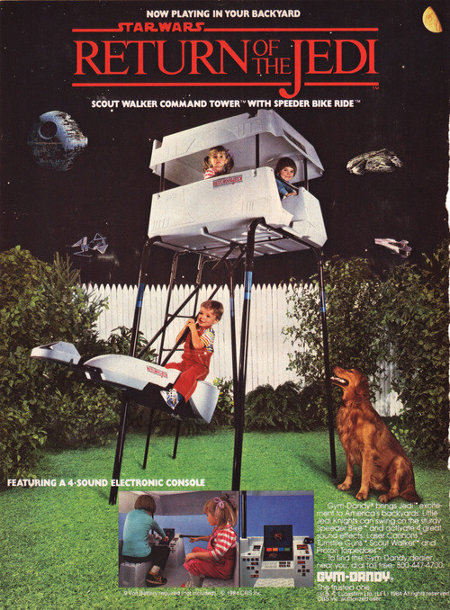
After destroying the database two more times via my own incompetence, the site seems to be back online, complete with the archives. Lost, however, was a post from last night about a Star Wars playset and a long, long post on Michael Vick, Kevin Kolb, and Andy Reid from this morning. I’m not going to recreate it, so you’ll just have to trust me when I tell you it was brilliant:arbitrage, dog-fighting, charges of Reid as a cretinous manager. And doomsaying, of course.
This is Woodward’s town; the president just lives in it.
September 22nd, 2010
It’s Woodward week in Washington again, and so time to re-read Andrew Ferguson’s amazing analysis of Bob Woodward’s Washington. An instant classic:
One of last week’s Post excerpts began with an account of a small dinner party Cheney gave last April to celebrate the fall of Baghdad. He invited a few colleagues and friends–among them his aide Scooter Libby, Paul Wolfowitz, and Ken Adelman, a former Reagan administration official who had been peppering the op-ed pages with articles supporting the Iraq invasion.
Adelman and his wife, Woodward tells us (as Adelman surely told him), cut short a visit to Paris to attend. “When Adelman walked into the vice president’s residence that Sunday night, he was so happy he broke into tears. He hugged Cheney for the first time in the 30 years he had known him.” Adelman, in other words, is Woodward’s kind of source. When the partygoers threatened to lapse into reverie about the first Gulf war, Adelman interrupted. Woodward quotes his remarks verbatim:
“Hold it! Hold it!” Adelman interjected. “Let’s talk about this Gulf war. It’s so wonderful to celebrate. . . . It’s so easy for me to write an article saying, ‘Do this.’ It’s much tougher for Paul to advocate it. Paul and Scooter, you give advice inside and the president listens. Dick, your advice is the most important, the Cadillac. . . . I have been blown away by how determined [the president] is.So I just want to make a toast, without getting too cheesy. To the president of the United States.”
The passage is fugue-like in its complexity, yet it displays, as plainly as possible, how it is that Woodward’s books expose the truth about Washington. It lies not in the details but in the way the details are acquired, through the capital’s daisy-chain of duplicity, flattery, and guile. Though the quotes that Woodward offers us appear to be direct, they are in fact direct quotes from a source, Adelman, who is quoting himself through a haze of memory and self-congratulation months after the words were uttered, at a party which his host, no doubt, had hoped would remain private. And while it is painful to watch a man parade his own sycophancy, it is dazzling to see it displayed in so many layers: Adelman sucking up to Woodward by describing himself sucking up to Cheney–as a way of impressing his fellow Washingtonians, who may someday, as a consequence, suck up to him.
Genius.
0 commentsAnd away . . . we . . . go.
September 21st, 2010
That’s about how I’m feeling.
0 commentsThe Long Road Home
September 20th, 2010
After getting hacked to death several weeks ago, I’m attempting to rebuild the site. With any luck, you’ll see some changes in a few days. If any one has helpful tips on restoring a wordpress database, send them along.
1 comment