March 12th, 2010
Jeffrey Goldberg deserves some credit for pushing back against Andrew Sullivan instead of just going along to get along. But he adds a curious addendum:
UPDATE: When I implied above that a magazine with standards would not allow Andrew to misinterpret history, I should have stated that the Atlantic’s website has no fact-checking standards, and not that it has no standards at all.
In all seriousness, what standards are those? They allow profanity, misrepresentation, public criticism of fellow employees, the endorsement of criminal activity, descriptions of sex, and truly pornographic use of the first-person. What is explicitly ruled out-of-bounds by TheAtlantic.com’s Standards & Practices Handbook?
Update: Goldberg now says that he simply isn’t going to respond to Sullivan anymore. Well, okay. That’s one way to do it. Go along, get along it is!
0 commentsBSG Sabotage
March 11th, 2010
From Galley Friend B.W.
Turn it up. Way up. And drink in the awesome.
[youtube=http://www.youtube.com/watch?v=BoQ0bqsJSJ8&hl=en_US&fs=1&]
0 comments"Now" vs. Last Year
March 9th, 2010
Galley Friend M.C. has a post up about David Gelernter’s lament about the internet and “nowness.” It’s very smart. Around the time of the Iranian election last year I wrote a long post (which I never published) about my dream to launch a magazine that was the anti-thesis of nowness, theoretically called Last Year. Here’s the resurrected idea:
***
During the beginnings of the Iranian post-election uprising, someone posited that the Twitter/Blogo-sphere had finally succeeded in creating two distinctive species of news consumers: People who relied on Old Media, whose understanding of the world was shallow and lagged something like 48 hours behind reality and people who relied on the newest of New Media, whose perceptions of events were broad and immediate. The suggestion being that those relying on the Twiblosphere were much better informed and much more up to date, culiminating in a better grounding of the world around us.
Let’s grant a couple things. First, let’s grant that if you were plugged into the Twiblosphere last weekend, you knew (or thought you knew) that events in Iran had suddenly shifted and that the regime was imperiled by a mass backlash against what was taken to be a rigged election. (Or rather, an election more rigged than the rigging everyone had already assumed to be built into the affair.) By relying on hundreds, or thousands, of mostly anonymous, burst transmissions you were able to piece together a pixelated version of events in something like real time. You couldn’t be sure that any given pixel was true, but the sea of them was able to tell you that something was happening.
Second, let’s grant that if you were part of the great unwashed getting your news from the papers–or even skipping out on news during weekends altogether–you were absolutely behind the time curve in understanding what was happening in Iran. And when you did finally figure out what was going on, the perception you got was already outdated.
The obvious question is, does it matter? Practically speaking, unless you’re part of a very small circle of people–DoD, State, the White House, a dissident group, someone with financial interests or family in the region–is there any real value to immediacy? I’d argue no. I doubt events in Iran would have been altered much if bloggers at the Atlantic hadn’t learned about the uprising until last Tuesday.
But more importantly, is it possible that the immediacy of information diminishes our understanding of the world around us? It certainly seems possible. At nearly every level of the physical and intellectual worlds, speed creates uncertainty and mistakes. Time allows deliberation and judiciousness. This is true of everything from writing to quarterbacking. The faster you have to go, the more mistakes you make.
The Twiblosphere has its place. And even if it didn’t, it’s not going away anytime soon. (By “it” I mean forms of instaneous publishing; I think it’s very possible that Twitter will be seen as a bizarre fad a few years from now.) But as the Twiblosphere has expanded, it has seduced and absorbed a bunch of projects which used to be devoted to long-view reflection and converted them to the realm of the Now.
I’m not sure that’s a good thing. Actually, I suspect it’s very, very bad in the long term. One of the founding hopes of the blogosphere was that all writing was forever and that your links could haunt you until the end of time, that the blogosphere could “fact check your ass.” There’s been some of that. But I think you could reasonably argue that the volume of writing has actually had something of the opposite effect on serious thinking: It’s hard to remember arguments or schools of thought from even two months ago.
It seems to me that the Now has become a terribly over-served niche. Long-view reevaluation has become dramatically underserved.
One of my little fantasies is to have some think tank start a journal–we’ll call it Last Year, just for giggles–which dealt exclusively with events from 12 months ago. So, for instance, the June 2010 issue would look back at the initial weeks of the Iranian uprising, explain the contemporaneous thinking surrounding it, and then evaluate how such thinking held up. Were the people claiming that the election was obviously rigged proven correct? Was the school lauding President Obama for his caution shown to be wise? In retrospect, was the uprising, more, or less, serious than it initially appeared?
That’s a magazine I’d read, anyway.
0 commentsSad News–Updated
March 8th, 2010
Variety has just let go of Todd McCarthy, who I have long regarded as America’s best movie critic. McCarthy’s reviews were so objective, informed, and modest that they often read less like critiques and more like appraisals. He wasn’t telling you if he liked or disliked a movie: He was telling you what was objectively good about it, what was objectively not good about it, and what the data suggested its commercial prospects might be like. While the rest of America’s critics tried to shout one another down (or show off their erudition), McCarthy came as close as anyone could to divining some measure of truth about the movies he reviewed. The closest analog I’ve ever seen is Walt Mossberg’s tech reviews.
I’ll miss his work.
Update: Roger Ebert has a fantastic little essay about how he met McCarthy as a high school kid:
I met him so long ago. When I was new in my job at the Chicago Sun-Times, I got a letter one day from a high school kid who said he loved the movies and wanted to have a talk with me about them. The letter struck a note. I met Todd and his friend Charles Flynn at Andy’s, a place with pretty good hamburgers, outside the back door of the Sun-Times.
They knew everything about the movies. They had seen them all, debated them all, written about half of them. They became for me examples of a species I thought of as “Doc Films Kids,” named after Doc Films at the University of Chicago, the nation’s oldest film society. Other Doc Films Kids included Dave Kehr, now at the New York Times. They’d seen so many movies I didn’t see how it was possible in such brief lifetimes. Once at O’Rourke’s, Flynn was telling me how much Otto Preminger hated over-the-shoulder shots, and I nodded wisely while asking myself, how in the hell does he know that?
Even Further Thoughts on Alpha Males
March 8th, 2010
Galley Friend T.R. sends in some deep thoughts on men and women, in response to that long, meandering post on alpha males, the new dating game, Tod, etc:
I fear you neglect three points in generalizing about the creature Today’s Woman:
1) You are actually only talking about the (heartbreakingly large) subset of women who have been abandoned or neglected by their fathers. The whole wanting to connect with the guy who blows you off thing pretty much reduces to that. Women who have always had close and affectionate relationships with their father find the bad boy attractions of their friends mystifying and the guy who ignores them irrelevant.
2) The phenomenon you describe precisely inverts over time. The 20-year old is thrilled by the cool older guy who doesn’t remember her name. The 30-year old is mildly miffed… maybe mildly intrigued. The 40-year old mom is just annoyed – though she DOES like that nice Dad who knows her childrens’ name, and thinks the guy who remembered and praised her homemade dip from last year’s Super Bowl party is actually quite charming. The 50-year old is positively delighted by the guy who notices her shoes, and the 60-year old is smitten by the guy who simply remembers her name.
3) Do not underestimate the power of peer validation among women. This is a longer topic for another time, but men rate all other men on a scale of 1 to 3 (loser, good guy, rock star). Women rate each other on a scale of 1 to 100 (it may be 1 to 1000, I am still exploring this), with gradations based on clothes, where their kids go to school, hair, butt size, career, husband’s car, promiscuity, house size, etc. Their principal social interaction consists of hot-syncing with each other over who is where on this list and, most importantly, which bitch is trying to act like a 62 when we all know she’s a 59, right? The point for this discussion is, if the high status girl sleeps with a guy, it rockets his desirability up the chart faster than any single thing that he could do or be. Success breeds success, failure failure. The pleasant mopey guy in his 30s is a leper. If he’s a widower, he’s attractive. If his dead wife was a high status knockout . . . he’s fishin’ with dynamite.
“Fishing with dynamite”? No comment.
0 commentsEric Massa: BSG Nerd?
March 8th, 2010
Galley Friend T.R. sends this excellent observation about Democratic Rep. Eric Mass: When describing his alleged mis-doings, Massa uses BSG slang!
“And I grabbed the staff member sitting next to me and I said, ‘What I really ought to be doing is frakking you,’ and then tossled the guy’s hair and left, went to my room, because I knew the party was getting to a point where I shouldn’t be there.”
0 commentsOscars? Let's Talk Alice
March 8th, 2010
The giant opening weekend for Alice in Wonderland ($116M) shows you that studio execs aren’t stoopid for making pre-existing properties. For all the records Avatar broke, one of the most interesting was “Biggest opening weekend for an original property.” Even with all the hype and all the ad support and fanboy love, etc, etc, Avatar could only do $77M. That’s saying something.
Living the Dream, cont.
March 4th, 2010
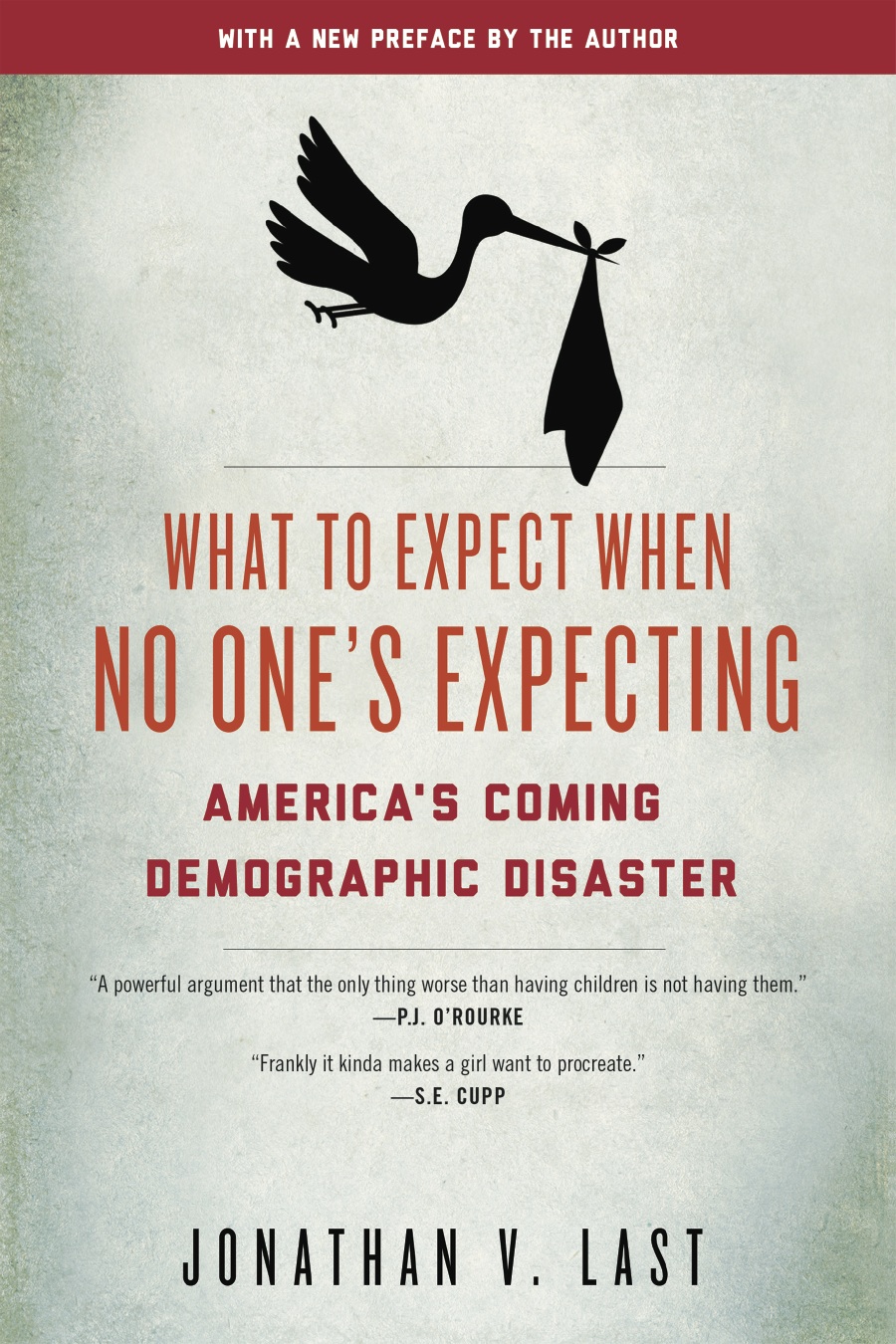
Like last year, I have come into possession of a book I never imagined I’d own: