October 5th, 2005
I’m talking about Jenny, not Harriet. Even without the Blog Crush, this one’s a keeper:
0 commentsThe guy waited forever to marry and finally de-virginize the girl and then he spent the rest of the marriage begging for at least 30 seconds of her time. Sure, she’s nice to look at in a creepy, looks too much like your father in law way, but in the grand scheme of things all he had was a whiny, vacuous nag who had a great body she wouldn’t let him touch and a dog who crapped all over his house.
Why SMU Matters (a little)
October 5th, 2005
If I seemed to be harping a little bit yesterday on Harriet Miers’s educational pedigree, I would remind readers that it was Beldar who brought up her second-rate schooling as an argument for her. Beldar suggested that going to the “second best law school in Texas” was a mark in Miers’s favor. To my mind that seems like a fairly desperate claim. If one is forced to argue that attending SMU is a reason to confirm Ms. Miers, then one must be woefully short on other supporting arguments.
But why should it matter where Ms. Miers went to school? If Miers had a long list of serious intellectual achievements or had created a long trail of serious public thought in the course of her career, then where she went to school would be moot. But absent any public evidence of intellectual horsepower (and faced with anecdotal evidence of the opposite) the fact that Ms. Miers went to a second-rate school does seem at least a little bit telling, if not overly important.
David Frum makes this point well:
The problem with Harriet Miers is not that she lacks formal credentials, although she does lack them. Had the president chosen former Solicitor General Theodore Olson, or Securities and Exchange Commission chair Christopher Cox, or former Interior Department secretary Gail Norton, nobody would complain that they were not federal appeals court judges.
Or had the president named Senator Jon Kyl (LLB, University of Arizona) or Senator Mitch McConnell (LLB, University of Kentucky) or Edith Jones Clement (LLB, Tulane), nobody would be carping at the absence of an Ivy League law degree.
Those who object to the Miers nomination do not object to her lack of credentials. They object to her lack of what the credentials represent: some indication of outstanding ability.
The objection to Miers is not that she is not experienced enough or not expensively enough educated for the job. It is that she is not good enough for the job.
Why is being smart important? Again, Frum:
All Americans are entitled to know that those judges who exercise the power of judicial review have thought hard and deeply about the immense power entrusted to them. If the courts were just about getting the votes, then the president should have chosen Dennis Hastert for the Supreme Court. But to change American law, it’s not enough to win the vote count. You have to win the argument.
I would note here two things:
(1) It is absurd that Miers supporters are using, as the bulk of their argument for her qualifications, her time as head of the Texas Bar Association and her time running a law firm. If heading a Bar Association is such good preparation for the Supreme Court, why not nominate Martha W. Barnett, who was the first woman president of the entire American Bar Association? Or, if the size of the Bar Association doesn’t matter, then why not nominate Gary D. Stott, who was president of the Central Utah Bar Association (and, as a bonus, went the very best law school in Utah and, as a double-bonus, is an actual judge; if you care about that sort of thing).
And second, if the skills of running a fair-sized regional company are so important, why not nominate Steve Jobs or Martha Stewart or Jack Welch or Rupert Murdoch, all of whom have run much larger companies much more successfully.
The reason Miers’s supporters are using these patently ridiculous claims to support her are, of course, obvious. As George Will notes:
[T]here is no reason to believe that Miers’s nomination resulted from the president’s careful consultation with people capable of such judgments. If 100 such people had been asked to list 100 individuals who have given evidence of the reflectiveness and excellence requisite in a justice, Miers’s name probably would not have appeared in any of the 10,000 places on those lists.
If John Kerry had produced a nominee with a comparable résumé, the Republicans now going to the ramparts for Miers would be–rightly–assailing that nominee for being completely unqualified for the High Court.
(2) Even if Miers would “vote right” as a Supreme Court justice–and I assume she would–that isn’t the point. Even if Miers was the mythical fifth vote to overturn Roe–something I dearly want to see in my lifetime–conservatives should be concerned with bigger things, which is to say the legal culture itself.
To turn away from that now–at a moment when the conservative party ostensibly controls both the White House and the Senate–is to abandon principle for rank politics. If we were concerned with simply getting someone on the Court who would “vote right,” then Bush should have nominated Gary Bauer or Rick Santorum.
A final note: While this is a disastrous moment for the Republican party, it strikes me as a pretty good moment for conservatism. It’s nice to see that most conservatives are still willing to buck their political party on what they see as a violation of principle. (Again, even if you used a time-travel machine to assure conservatives that Miers would “vote right” for the next 20 years, I don’t think they’d change their opposition.) I don’t know that, in a similar situation, liberalism would muster the same fight within the Democratic party.
0 commentsArchiteuthis Lives!
October 5th, 2005
Galley Friend A.G. sends this link to an essay by Steve O’Shea. There are more squid fetishists than you think:
I’ve dreamed of the moment when this elusive beast would be found. I promised myself that when someone achieved this seemingly impossible feat, that I’d sit down, uncork a bottle of wine and draw deeply on a cigarette, relaxing as Neil Diamond’s “Jonathan Livingston Seagull” album played in the background.
And so last week, I got the opportunity to play out my dream. . . .
Great stuff.
0 commentsThat's My Bush!
October 4th, 2005
The American Spectator reminds us of the glory days of Talk magazine:
Before he became president, George Bush was asked by journalist Tucker Carlson, what activity don’t you excel at? He responded, “Sitting down and reading a 500-page book on public policy or philosophy or something.”
I’m sure the braniacs at SMU are appalled by this sort of thing.
Bonus: As Miers boosters will note, this just goes to show that Ivy League credentials are meaningless!
0 commentsIf You're So Smart, Why Aren't You President?
October 4th, 2005
Galley Friend B.W. sends along this link to Mark Shea, who posits:
0 commentsBush has managed to create an almost perfect storm of contempt for his base, coupled with ongoing contempt from people who will always loathe him. This is more than mere bungling. This is active stupidity. Stupidity that may come only once in a generation. Stupidity that works on so many levels. You almost have to admire the sheer elegance of the stupidity. It tempts you to believe in Stupid Design Theory.
Presidential Infallibility
October 4th, 2005
From this morning’s press conference:
Q Thank you, Mr. President. Mr. President, of all the people in the United States you had to choose from, is Harriet Miers the most qualified to serve on the Supreme Court?
THE PRESIDENT: Yes. Otherwise I wouldn’t have put her on.
To be fair to the president, after telling this whopper, he went on at some length about what he personally found to make Miers so qualified, the main thrust of which seemed to be “I’ve known Harriet for over a decade.” What Bush really means, I think, is She’s the most qualified person because I put her on. But never mind that.
But what seems strange is that until several weeks ago, Miers was ostensibly the second-most qualified person in all of America for the Supreme Court. Yet it seems that in comparing her to the first-most qualified person–John Roberts–they share almost none of the same qualities and are being judged on almost none of the same grounds. It’s an enigma!
Kind of like how Michael Brown was allowed to resign even though he was doing a “heck of a job” helping the citizens of New Orleans.
0 commentsWhy Not the Second Best?
October 4th, 2005
Why, oh why, must I quarrel with Beldar? (Who, in addition to being a both a gentleman and a scholar, is rarely short of awesome.)
Today Beldar continues his defense of Miers by posting a correction to this Rich Lowry post. In short, Lowry reports that a pro-Bush lawyer says unflattering things about Meirs’s qualifications, essentially:
Says Miers was with an undistinguished law firm; never practiced constitutional law; never argued any big cases; never was on law review; has never written on any of the important legal issues. Says she’s not even second rate, but is third rate. Dozens and dozens of women would have been better qualified.
Beldar’s response is a correction in one good sense: He reports that Miers was an editor at Southwestern Law Journal. The rest of his correction seems to be little more than Beldar sticking up for the reputation of regional Texas lawyers. He says that he thinks Meirs’s firm was distinguished; that it’s not particularly important that she’s never practiced con law; that she had big clients, even if she didn’t argue any big cases; and that she very well may have written on important issues in private work for her clients that you and I will never be able to judge.
This is pretty thin stuff and I find it unconvincing. If you’ll permit the snobbery, Beldar’s appraisal of Meirs’s schooling tells you all you need to know about where he’s coming from. He means it as a defense of Meirs when he says:
. . . when Ms. Miers was a student there, SMU Law School was widely regarded as the second-best law school in Texas.
[Insert your own joke here.]
I feel like a jerk for pointing this out–and there’s nothing wrong with regional schools and I’m sure they often turn out very bright, competent lawyers who are great people. But this is the Supreme Court we’re talking about and it doesn’t seem like too much to ask that maybe we hope for better than what the second-best law school in Texas has to offer?
Update, 12:09 p.m.: For people who insist that the second-best law school in Texas was nonetheless stocked with great minds, I’ll refer readers back to Miers’s description of Bush as the “most brilliant man” she had ever met.
0 commentsEeeeeeeewwwww!
October 4th, 2005
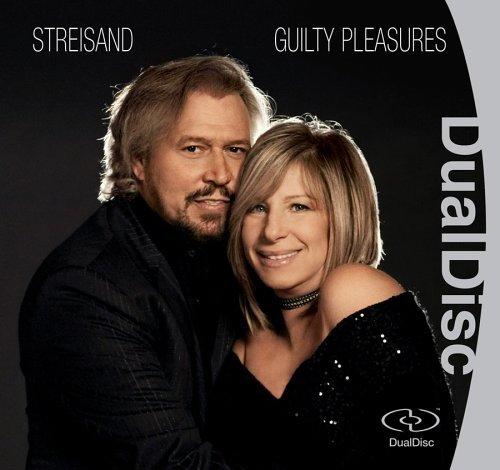
Years from now, when historians look back on the decline and fall of Western Civilization, they will no doubt point to the release of this album.