August 23rd, 2012
2 comments
And the new WWE Hardcore Champion is . . .
August 22nd, 2012
Holy shit. Ferguson slips under the bottom rope, digs around under the mat, and pulls out some tables, ladders, and chairs. And then proceeds to go hardcore on the goon squad which popped up to take down his Newsweek story. Sample awesome:
First prize goes to Berkeley professor Brad DeLong, whose blog opened with the headline “Fire-His-Ass-Now.” “He lied,” rants DeLong. “Convene a committee at Harvard to examine whether he has the moral character to teach at a university.” My own counter-suggestion would be to convene a committee at Berkeley to examine whether or not Professor DeLong is spending too much of his time blogging when he really should be conducting serious research or teaching his students. For example, why hasn’t Professor DeLong published that economic history of the 20th century he’s been promising for the past six years? It can’t be writer’s block, that’s for sure.
Runner up is James Fallows of The Atlantic for his hilariously pompous post “As a Harvard Alum, I Apologize.” Well, as an Oxford alum, I laugh.
In third place comes Krugman with his charge of “unethical commentary … a plain misrepresentation of the facts” requiring “an abject correction.” The idea of getting a lesson from Paul Krugman about the ethics of commentary is almost as funny as Fallows’s apologizing on behalf of Harvard. Both these paragons of the commentariat, by the way, shamelessly accused me of racism three years ago when I drew an innocent parallel between President Obama and “Felix the Cat.” I don’t know of many more unethical tricks than to brand someone who criticizes the president a racist.
If only he’d had a moment to spare for America’s great young talent, Ta-Nehisi Coates.
Nintendo Power, RIP
August 22nd, 2012
I remember getting the first issue in the mail, for free. It had Zelda tips.
0 commentsA Guided Tour of a Charmed Career
August 21st, 2012
In the course of castigating Niall Ferguson for not loving Obama, Ta-Nehisi Coates gives this little Cliffs Notes version of his CV:
When I worked at the Village Voice back in the early aughts, there were fact-checkers. When I worked at TIME (Newsweek‘s direct competitor) in the mid-aughts there were fact-checkers. Some of this may have changed, due to budgets.My freelance experience has pretty much been the same–everyone from VIBE to the The New York Times Magazine had fact-checkers. The Times’ edit page did not have dedicated fact-checkers, but they did have editors fact-checking. They asked for sources, looked themselves, and followed up with me in instances where I forgot to cite a source, or none could be found.When I arrived at The Atlantic in 2008, I was subjected to arguably the most thorough fact-checking procedure in all of popular publishing. That meant submitting an annotated version of the story with all sources cited, turning over all my notes, transcripts or audio, and the names and numbers of each of my sources, all of whom were called to confirm the veracity of my quotes. When I freelanced for The New Yorker, it was pretty much the same deal and the same level of scrutiny.
Excuse for Going AWOL
August 20th, 2012
0 comments
Thoughts on Paul Ryan
August 13th, 2012
Beyond my Paul Ryan as Harvey Dent riff (and why has no one picked up the subtext?), I haven’t had any deep thoughts on the veep pick yet. But Galley Friend X has. Here’s GF X tossing a little grenade into the room:
In re: Ryan v. Biden. (Or, “I question the gi sometimes. It seems to get in the way.”)
OK, obviously I’m absolutely gleeful over Romney’s pick of Ryan. But . . . why is every Republican so completely certain that Ryan will mop the floor with Biden at the debate?
Ryan’s a smart dude, and a very good speaker. But his speeches always fight on home turf, before audiences that share his assumptions.In a debate, by contrast, an opponent will challenge those assumptions — or even disregarding them altogether, and steering the debate to completely different turf — can we be so certain that Ryan will win?Think back to the Ryan-Brooks debate at AEI. David Brooks held his own against Ryan (even after Ryan ducked out early, to return to the Hill). After pointing out that Ryan’s (and Arthur Brooks’s) freedom-versus-socialism dichotomy simply caricatured much more difficult policy realities, he pinned Ryan down on the specific question of trade-offs and compromise. Ryan simply had no response to the utterly predictable question, what if President Obama offered you big spending cuts for a relatively small (i.e., six-point) top marginal tax increase? Brooks completely nailed him on his inability to seriously consider compromise even when necessary to avoid fiscal disaster.And Brooks and Ryan even came from more or less the same foundations. I suspect that when Biden faces Ryan, he’ll take a relentlessly populist position, hammering Ryan on cutting Medicare, and endorsing tax cuts that disproportionately favor the rich. And some of what Biden says might even be somewhat true. What will Ryan do then?
In other words, Ryan and Biden will come to the debate with two completely different styles of fighting. Like Severn v. Gracie (1994). Or Megashark v. Crocosaurus (2010).Or, perhaps most relevantly, like Buckely v. Beame v. Lindsay (1965). As WFB recounted in his post-campaign memoir . . .“My associates urged, particularly in my opening and closing statements, that, instead of tangling with Beame and Lindsay, I should speak over their heads (as they were continually doing over mine and each other’s) directly to the voters, giving them reasons why they should vote the Conservative ticket. I tried to do that, as often as it occurred to me; but often it didn’t occur to me, my ungovernable instinct being to fasten on a weakness in the opponent’s reasoning and dive in, or on a weakness in my own, and apply sutures, on the (Platonic?) assumption that voters will be influenced by the residual condition of the argument. A good debater is not necessarily a good vote-getter: you can find a hole in your opponent’s argument through which you could drive a coach and four ringing jingle bells all the way, and thrill at the crystallization of a truth wrung out from a bloody dialogue — which, however, may warm only you and your muse, while the smiling paralogist has in the meantime made votes by the tens of thousands.”
Buckley lost his campaign.On the bright side, Gracie won his fight, and in terms of forensic analogy I guess Ryan is probably Gracie, and Biden is Severn. Still, Severn put Gracie through 16 minutes of hell, before Gracie seized on Severn’s mistake and got Severn to tap out.Gracie, like Ryan, dresses the part of the pro. Still, as one of the commentators noted about Gracie’s attire, “I question the gi sometimes. It seems to get in the way.”
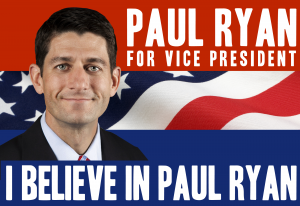
I Believe in Paul Ryan
August 11th, 2012
He’s the white knight, the hero entitlement reform needs. What’s that you say? Mitt Romney’s negatives in the swing states show almost opportunity to make up lost ground? Remember, it’s always darkest before the dawn. And I promise you, the dawn is coming.
Let’s just hope the experience of running in a presidential campaign–with Mitt Romney and against Barack Obama–doesn’t leave him wandering around Washington muttering to himself and flipping a coin.
(I don’t do Photoshop, but surely this has to happen. Internet, make it so.)
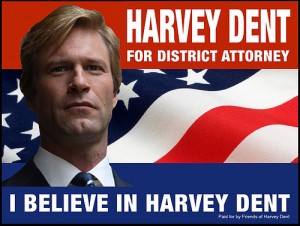
Updated: Courtesy of the great Katherine Miller:
On “Lah-d”
August 10th, 2012
Galley Friend Gabriel Rossman has a really interesting statistical look at baby names that goes deeper than the typical Baby Name Voyager search:
I was inspired to play with this data by two things in conversation. The one I’ll discuss today is somebody repeated a story about a girl named “Lah-d,” which is pronounced “La dash da” since “the dash is not silent.”
This appears to be a slight variation on an existing apocryphal story, but it reflects three real social facts that are well documented in the name literature. First, black girls have the most eclectic names of any demographic group, with a high premium put on on creativity and about 30% having unique names. Second, even when their names are unique coinages they still follow systematic rules, as with the characteristic prefix “La” and consonant pair “sh.”
Not coincidentally, Rossman’s book, Climbing the Charts (a statistical look at how pop songs perform on the charts) is out and worth your valuable time.
4 comments